



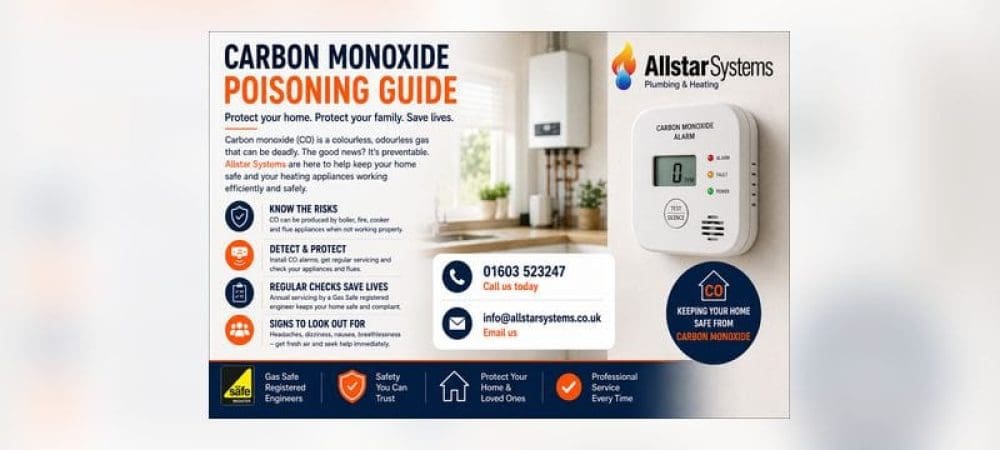
Carbon Monoxide Poisoning Guide: Symptoms, Risks and Prevention
Carbon monoxide can occur when fuel-burning appliances do not burn their fuel safely. This gas has no smell, taste or colour. NHS symptoms of exposure include headaches, dizziness, sickness, weakness, confusion, chest pain and shortness of breath. In severe cases, exposure can result in loss of consciousness.
This guide will explain symptoms of CO poisoning and what you can do to protect yourself and your home. This article covers appliances including homes, rental properties, boilers, gas fires, cookers, heaters and wood burners.
What Is Carbon Monoxide?
This is a poisonous gas created as a result of fuels like gas, oil, coal and wood burning incompletely. This can occur if a unit is faulty, blocked or poorly maintained. As no smell or colour, symptoms or an alarm system must be taken with action.
Common symptoms to watch for
Symptoms of CO poisoning are similar to those of the flu or food poisoning. Symptoms will typically ease when you are outside of a property and return when you enter a building.
These symptoms include:
- headaches
- dizziness
- nausea
- weakness
- tiredness
- confusion
- breathlessness
- chest pain
- collapse
If several people within a same building feel unwell, or if their symptoms improve when outside a building, urgent action is required.
What to do if you suspect carbon monoxide exposure
If you think there is a possible leak or unsafe fumes within a building, stop using the appliance. Leave the building and seek medical advice when outside. NHS states that you should not re-enter the building until you have received medical advice.
If someone is very unwell or has lost consciousness inside a building, call an emergency medical service. Do not attempt to investigate yourself.
Warning signs around appliances
There may be signs of faulty units that give warning of potential exposure. Gas Safe Register states that signs of faulty units could include floppy yellow or orange flames from flues, dark staining of a flue, pilot lights extinguishing and condensation inside windows.
These signs do not imply CO has been released into the air. They do mean an appliance is faulty. Do not use the unit and arrange for a Gas Safe engineer inspection.
How to help prevent carbon monoxide risks
Best way to prevent CO exposure is to ensure that appliances are installed safely and routinely serviced. Gas equipment in rented properties must be routinely checked by a Gas Safe engineer annually. The landlord is also responsible for maintaining records of these checks and making them available to the tenants when required.
Boilers in owner-occupied properties should also be routinely serviced and checked if they behave oddly. Ensure the flues and vents are not blocked by debris and ensure that heaters and fires do not block their vents. Do not use outdoor heaters or generators within the building.
Do you need a carbon monoxide alarm
As this by- product of gas that cannot be detected by human senses, an alarm system is needed to protect individuals in the property. In England, private landlords are required to install carbon monoxide detectors in any room used as accommodation for tenants, as long as there is a fixed combustion appliance (except gas cookers). Owner occupiers should also install these alarms in any areas with fuel-burning equipment.
Alarms should be installed, tested or replaced as per manufacturer’s specifications. They do not replace the safety of installing and servicing equipment correctly.
FAQs About Carbon Monoxide Poisoning
What are the first signs of carbon monoxide poisoning?
Headaches, dizziness, nausea, weakness, tiredness and confusion are common early symptoms.
Can a boiler cause carbon monoxide?
Yes. A faulty, blocked, poorly maintained or badly installed fuel-burning appliance can create risk.
Should I ignore symptoms if they feel like flu?
No. If symptoms improve outside or affect several people indoors, treat it seriously.
How often should a gas boiler be checked?
Gas appliances and flues in rented homes need an annual safety check. Homeowners should also arrange regular servicing.
Can oil boilers and LPG boilers produce carbon monoxide?
Yes. Any fuel-burning appliance can produce CO if combustion is incomplete or the equipment is unsafe.
What are warning signs of an unsafe gas appliance?
Warning signs can include yellow or orange flames, sooty staining, pilot lights going out, excessive condensation and unusual appliance behaviour.
Who should work on gas appliances?
Anyone employed to work on domestic gas appliances must be Gas Safe registered and competent for the specific type of work.